
Detached stairs

Don't bolt your stairs to your house.

Attached steps mean a contractor, footings, a ledger board and a lot of back and forth. A detached stair sets on level ground, stays off your siding and moves when you need it to.

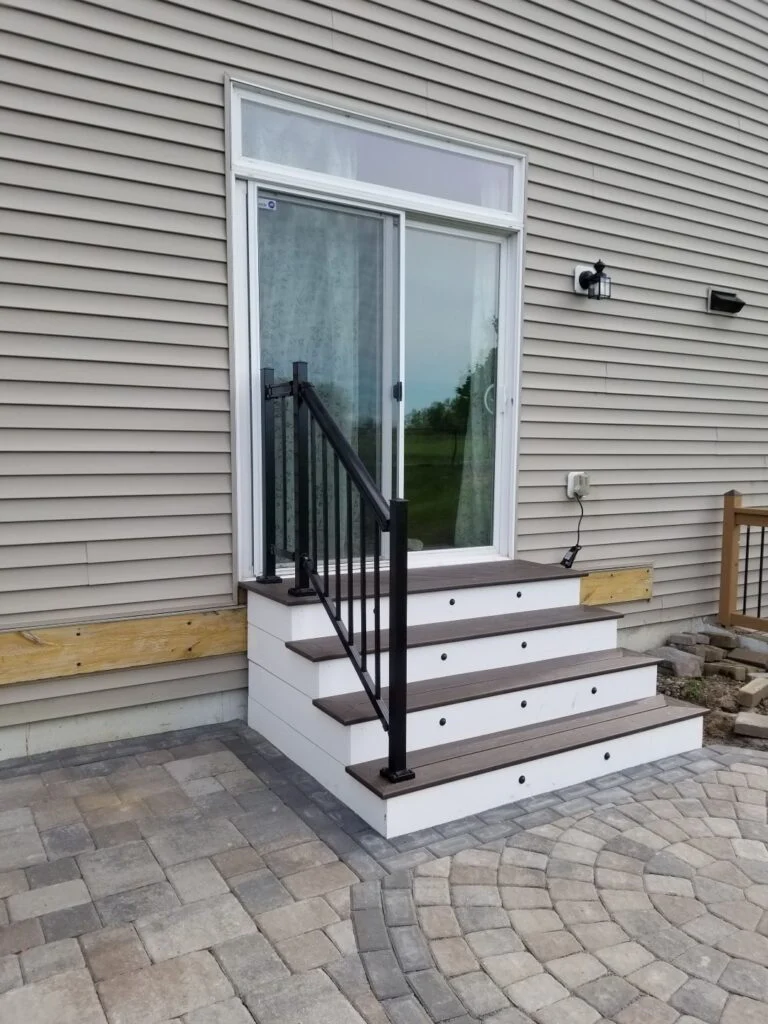
Detached composite stair with a black railing on a circle paver patio

Built inthe USA

Trexcomposite treads

Nofootings

Shipsacross the US

The short answer

A detached stair stands on its own on level ground. Nothing bolts to the house, so there is no ledger through your siding, no footings to dig and no contractor to schedule. You can lift it for foundation work, move it for a new patio and add to it later.

Detached vs attached

One sits next to your house. The other becomes part of it.

Detached (Stairs Delivered)

  • Sets on level ground. Nothing bolts to the house
  • No footings to dig
  • Lift it out of the way for siding, foundation or patio work
  • Air moves behind it, so the wall can dry out
  • Rides with the ground through freeze and thaw
  • Arrives finished. You set it in place

Attached to the house

  • Ledger board bolted through your siding
  • Footings dug below the frost line
  • A general contractor, and often a permit
  • Locked in place. Foundation access means tearing it out
  • Water can sit at the ledger and the wall behind it
  • Weeks of scheduling and back and forth

Why detached wins

Your house changes. Your stairs should keep up.
Move it

Redoing the patio or the siding? Lift the layers apart, set them aside and stack them back when the work is done.

Add to it

Start with what you need now. Add a railing or lights later, or step up to a bigger set when the patio grows.

Reach your foundation

Water in the basement? Nothing blocks the wall for good. Lift the stair to get to the foundation, a window well or the siding, then set it back.

Keep it dry

No drilling into your house and room for air behind the stair. Less trapped water against the wall means less condensation, rot and mold.

Spend less

No footings, no ledger and no contractor schedule.

Keep it simple

More work coming on the house? Move the stair, do the job, set it back. No tear out, no rebuild.

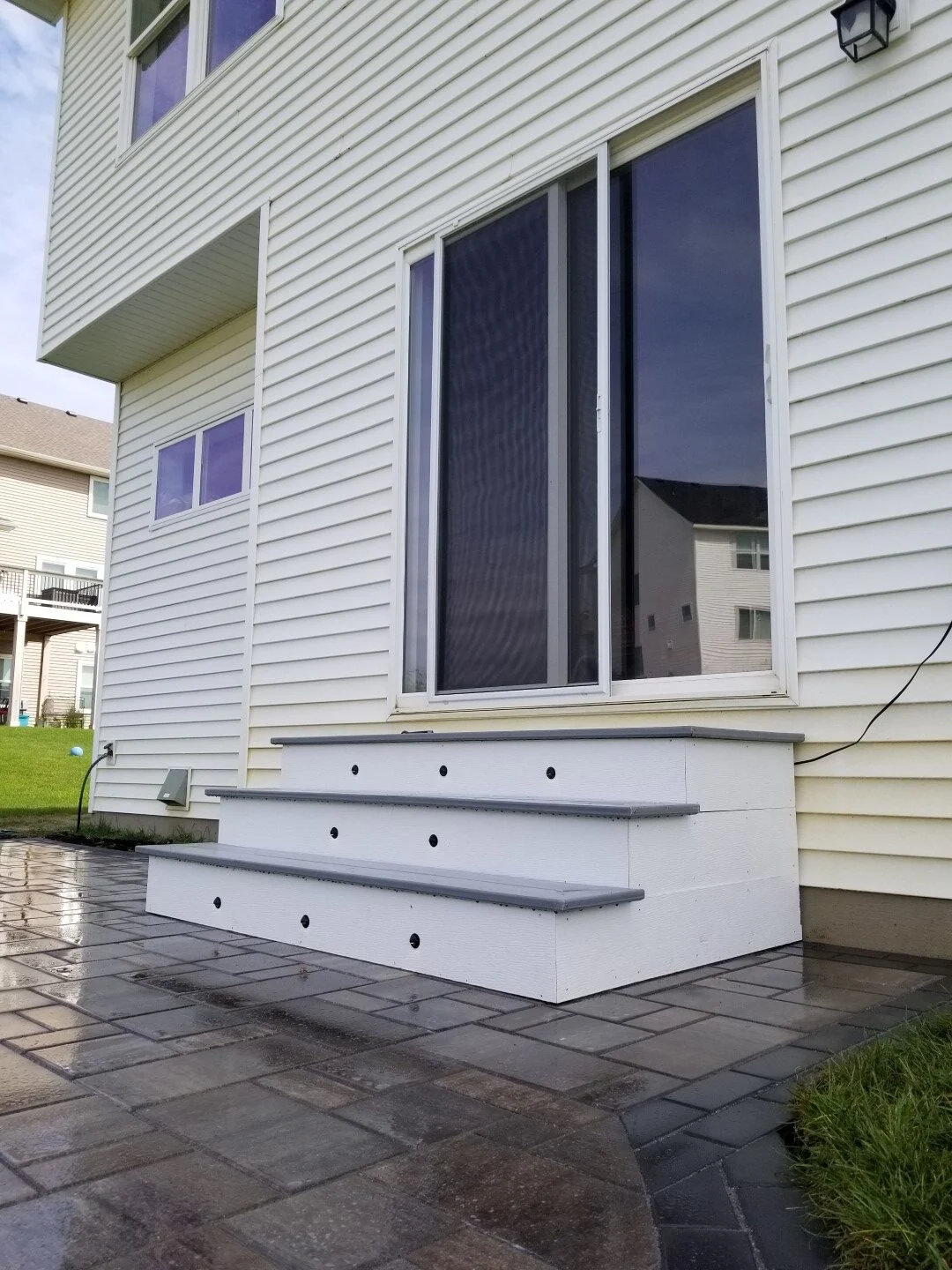
Gray composite stair at a slider door

A word on contractors

Buy what's best for your house, not what's best for the bid.

Don't get sold by a contractor. A contractor gets paid to build, so a bigger attached project means a bigger invoice. Do what's best for your house, for you and for your flexibility down the road.

For most doors 1 to 5 steps up, the answer is a solid, high quality stair on level ground. Trex composite treads, white PVC fascia and a ground-contact treated frame, built square in our own shop.

Skip the ledger. Keep your options open.

The plan

Three steps from your door to done.

01

Build your stair

Pick the width, steps, direction, landing, railings and lights in our builder. Enter your ZIP and you see your all-in price.

02

We deliver it

Built in the USA. Delivered to your home, or picked up free at our Lakeville, MN shop.

03

Set it in place

Carry it to the door, check level, stack the landing on. No footings. No attachment to the house.

What bolting on costs

Attached is hard to undo.

  • A ledger means holes through your siding and flashing that has to stay sealed for years
  • Footings lock the stair in one spot for good
  • Foundation, siding or window work means tearing it out
  • Every change goes back through a contractor

Real backyards

“I didn't want just a standard stair down. I wanted something with a platform.”

A Farmington, MN family · Took out the deck, built a patio, kept the backyard

They wanted steps off more than one side and a real landing, with no deck to maintain and something easy to shovel with kids and a dog.

What people ask first

Straight answers before you build.

Yes. It sits flat on a level base with a wide footprint. Set it on pavers, concrete, asphalt or a compacted gravel pad, and add a railing on taller sets.
On a level, compacted base it stays put. If the ground moves over winter, check level in spring and add a shim if needed.
Rules vary by city, and some treat a freestanding stair differently from an attached deck. Check with your city before you build.
Yes. The landing lifts off the base, and each piece carries by hand. Our COO moves his own stairs every six months to drain his hot tub.
No. If you can lift, level and stack, you can set it. See how it works for the full set of steps.

Full disclosure

Yes, this page is about detached vs attached stairs

People search for this because a contractor quoted them an attached build and something felt off. We wrote this page so you can see both sides before you sign anything.

We sell detached stairs, so we have a stake in the answer. The facts above still hold: no ledger, no footings, and a stair you can move.

Ready when you are

Keep your stairs off your house and your options open.

Design it in our builder and see your all-in price, or send us your door details and we'll size it for you.

Go to Top